How to Maximize Warehouse Space Without Expanding Your Facility Page
April 26, 2026
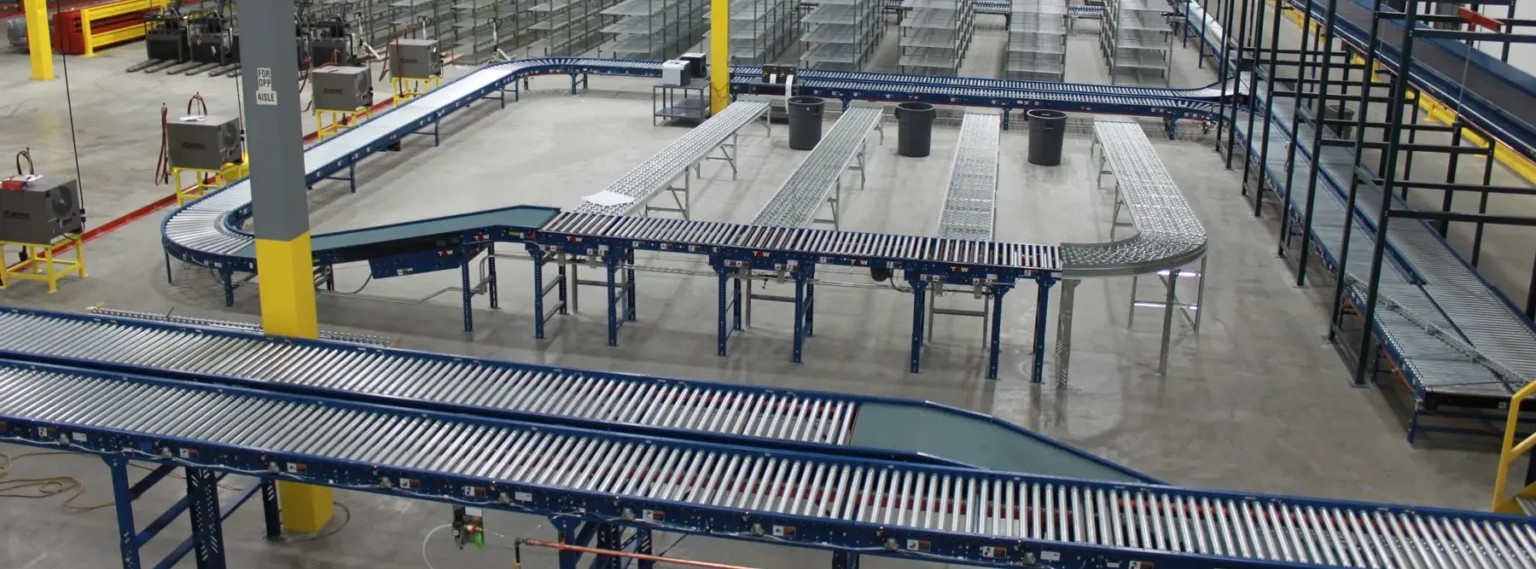
Running out of space inside a warehouse does not always mean the building is too small. In many cases, the issue is how space is being used rather than how much space exists. As inventory grows and operations become more complex, layouts that once worked well can start to slow everything down. Before considering expansion, it is worth evaluating how storage, movement, and equipment interact within the existing footprint. Small changes in layout, storage strategy, and workflow can often create measurable gains in capacity.
Start by separating storage problems from movement problems
A warehouse can feel full for two different reasons. Either there is not enough room to store product, or there is not enough room to move product efficiently. These are not the same problem, and solving the wrong one leads to wasted effort.
If aisles are constantly congested, staging areas are overflowing, or operators are waiting on access, the issue is often movement. If racking is full and overflow inventory is spreading into walkways, the issue is more likely storage capacity. Identifying which constraint is limiting performance is the first step toward improving space.
Use vertical space before increasing square footage
One of the most common opportunities in warehouse environments is unused vertical space. Many facilities do not fully utilize the available height of the building, especially as inventory levels increase over time.
Increasing racking height or reconfiguring storage systems can significantly expand capacity without changing the building footprint. This approach requires alignment between racking, equipment capabilities, and safety practices, but it is often one of the most effective ways to gain space quickly.
Revisit aisle width and layout decisions
Aisle width plays a major role in how much usable storage a warehouse can support. Wider aisles make movement easier, but they reduce the number of storage positions available. Narrower aisles increase storage density but require more precise equipment and operator control.
Facilities that were originally designed for flexibility often use wider aisles than necessary. Adjusting aisle width, when paired with the right equipment, can create meaningful additional storage without affecting overall throughput.
Improve slotting to reduce wasted space
Slotting refers to where products are placed within the warehouse. Poor slotting creates inefficiencies that make a facility feel more crowded than it actually is.
Fast-moving items should be located in easily accessible areas to reduce travel time, while slower-moving inventory can be stored higher or further away. Grouping similar products and aligning storage with picking patterns helps reduce unnecessary movement and opens up usable space.
Even small adjustments to slotting strategy can improve both capacity and productivity.
Evaluate whether equipment fits the space
Equipment that is too large or not suited for the layout can limit how efficiently space is used. Standard forklifts may require wider aisles than necessary, while specialized equipment can operate in tighter configurations or support higher storage systems.
In some cases, adjusting equipment type allows a warehouse to reclaim space that was previously reserved for maneuvering. The goal is not to change equipment for the sake of change, but to ensure it aligns with how the facility is structured.
Reduce congestion at key workflow points
Space limitations are often most visible at specific points in the warehouse. Receiving areas, staging zones, and loading docks can become bottlenecks that affect the entire operation.
Improving how these areas are organized can free up space across the rest of the facility. This may include redefining staging areas, adjusting inbound and outbound flow, or reducing unnecessary product handling steps.
When movement improves, available space tends to increase as a result.
Know when optimization is no longer enough
Not every space constraint can be solved internally. If inventory levels have permanently increased, product mix has changed significantly, or workflows require more separation, expansion may still be necessary.
However, evaluating layout, storage, and workflow first ensures that any expansion decision is based on actual need rather than avoidable inefficiencies.
Frequently asked questions about warehouse space optimization
How do I know if my warehouse is out of space or just inefficient?
If congestion and delays are concentrated in specific areas, the issue is often workflow-related. If storage locations are consistently full and inventory is spilling into operational space, capacity is likely the constraint.
What is the fastest way to increase warehouse storage capacity?
Using vertical space through racking adjustments or layout changes is often one of the fastest ways to increase capacity without expanding the building footprint.
Do narrow aisles reduce warehouse efficiency?
Narrow aisles increase storage density but require the right equipment and operator control. When implemented correctly, they can improve both space utilization and overall efficiency.
How important is slotting in warehouse performance?
Slotting has a direct impact on travel time, picking speed, and congestion. Proper slotting can improve both space utilization and workflow efficiency.
When should a warehouse expand instead of optimize?
Expansion is typically considered when storage demand consistently exceeds capacity even after layout, storage, and workflow improvements have been made.
If you are evaluating ways to improve warehouse space or layout, Alta Material Handling can help assess your current setup and identify practical improvements. Explore our warehouse design solutions online to get started.