Selective vs Push-Back vs Pallet Flow Racking: Which Storage System Fits Your Operation
May 26, 2026
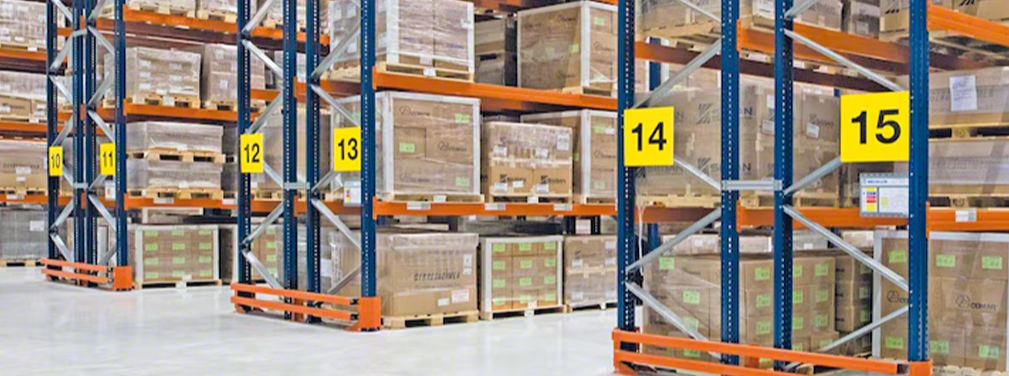
Choosing the right racking system affects more than storage capacity. It influences how quickly inventory moves, how much space is available, and how efficiently operators can access product throughout the day. Selective, push-back, and pallet flow racking each support different types of warehouse operations, and the right choice depends on how inventory is stored, picked, and replenished. Understanding how these systems differ makes it easier to align storage with workflow rather than forcing operations to adapt around the wrong layout.
Start with how inventory moves through your warehouse
Before comparing racking systems, it helps to look at how product actually flows. Some operations rely on constant access to individual pallets, while others move large volumes of the same SKU in and out of storage. In some cases, first-in, first-out rotation is critical. In others, last-in, first-out storage is acceptable. The structure of the racking system should reflect these patterns. When storage matches movement, efficiency improves across picking, replenishment, and overall space usage.
Selective racking for accessibility and flexibility
Selective racking is the most common warehouse storage system because it provides direct access to every pallet. Each storage position is independently accessible, which makes it well suited for operations with a wide variety of SKUs or frequent picking from multiple locations.
This system is often used in warehouses where flexibility is more important than storage density. Because each pallet is accessible, it supports order picking, mixed inventory, and changing product layouts without requiring major adjustments.
The tradeoff is space. Selective racking requires wider aisles and more open access, which reduces overall storage density compared to other systems.
Push-back racking for higher density storage
Push-back racking is designed to increase storage density while maintaining relatively easy pallet access. Pallets are stored on inclined rails, allowing multiple loads to be stored in a single lane. As new pallets are placed, existing pallets are pushed back into the system.
This setup works well for operations that store multiple pallets of the same product and do not require access to every pallet position at all times. It is commonly used for last-in, first-out (LIFO) inventory flow, where the most recently stored pallet is the next one retrieved.
Push-back racking reduces the number of aisles required, which increases storage capacity. However, it is less flexible than selective racking when handling a large number of unique SKUs.
Pallet flow racking for high-throughput operations
Pallet flow racking is designed for operations that rely on consistent movement and strict inventory rotation. This system uses gravity-fed rollers, allowing pallets to move from the loading side to the picking side automatically.
Because pallets flow forward as product is removed, this system supports first-in, first-out (FIFO) inventory management. It is often used in industries where product rotation is critical, such as food and beverage, pharmaceuticals, and high-volume distribution environments.
Pallet flow systems are well suited for high-throughput operations where speed and consistency matter. They require more planning and investment upfront but can significantly improve picking efficiency and reduce travel time in the long term.
Comparing storage density, access, and flow
Each system offers a different balance between accessibility, storage density, and movement efficiency:
- Selective racking provides the most direct access but the lowest storage density
- Push-back racking increases density while maintaining moderate access to pallets
- Pallet flow racking supports continuous movement and rotation but requires consistent inventory patterns
The right choice depends on how often pallets need to be accessed, how many of the same SKU are stored together, and whether inventory rotation is required.
How equipment and layout influence your decision
Racking systems do not operate independently from the rest of the warehouse. Aisle width, lift height, and equipment type all affect how well a system performs.
For example, high-density systems may require equipment that can operate in tighter aisles or reach higher storage levels. Layout decisions should consider both the storage system and the equipment used to interact with it.
When racking and equipment are aligned, movement becomes more predictable and space is used more efficiently.
When to choose each system
Selective racking is typically chosen when operations require flexibility and direct access to a wide range of products. Push-back racking works well when storing multiple pallets of the same SKU and increasing storage density is a priority. Pallet flow racking is best suited for operations that depend on consistent throughput and strict inventory rotation.
In many facilities, a combination of these systems is used to support different areas of the warehouse based on how inventory moves.
Frequently asked questions about racking systems
What is the difference between selective and push-back racking?
Selective racking allows direct access to every pallet, while push-back racking stores multiple pallets in a single lane, increasing storage density but limiting access to individual positions.
When should I use pallet flow racking?
Pallet flow racking is best used in operations that require first-in, first-out inventory rotation and high-throughput picking environments.
Which racking system saves the most space?
Push-back and pallet flow systems typically provide higher storage density than selective racking because they reduce the number of aisles required.
Is pallet flow racking more efficient than push-back racking?
Pallet flow racking can improve efficiency in high-volume environments with consistent product movement, while push-back racking is often better suited for operations with moderate throughput and LIFO storage.
Can different racking systems be used in the same warehouse?
Yes. Many warehouses use a combination of selective, push-back, and pallet flow systems to support different products and workflows within the same facility.
If you are evaluating racking systems and how they fit into your warehouse layout, Alta Material Handling can help assess your operation and identify practical storage solutions. Explore our available racking systems today.